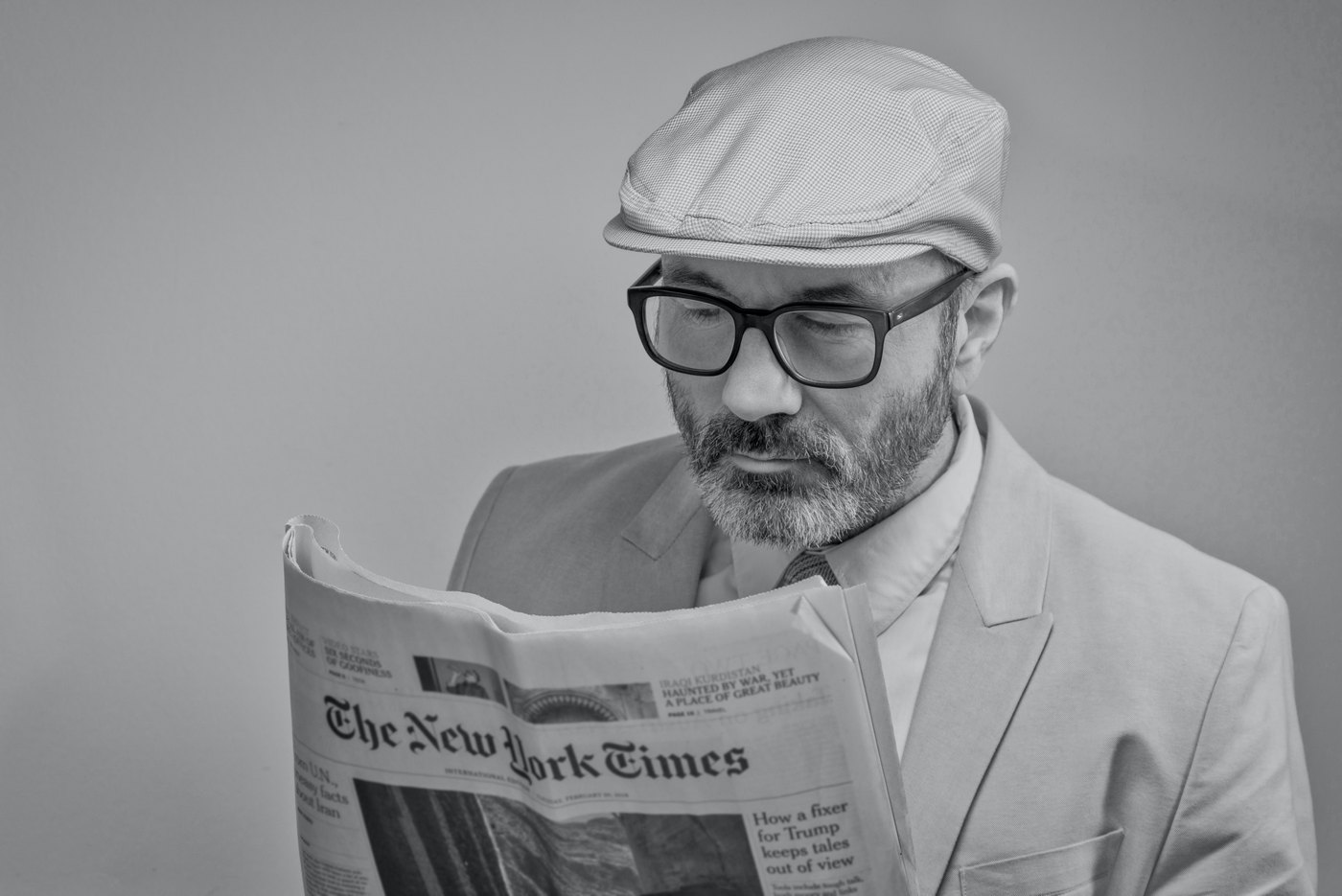
Political journalism has always involved risk, but the nature of that risk has changed. In earlier eras, danger was often associated with war zones, authoritarian states, or major corruption investigations. Today, even routine visibility can become a threat. A political journalist does not need to uncover a state secret to become a target. In a highly networked media environment, simply being visible, recognizable, and associated with politically charged reporting can be enough to trigger harassment, intimidation, and long-term personal risk.
This shift matters because public visibility is now built into the job. Journalists appear on television, publish under their own names, maintain social media accounts, participate in podcasts, speak at events, and often cultivate a recognizable professional persona. Visibility helps build trust, authority, and audience connection. At the same time, it creates exposure. The reporter is no longer just a byline attached to a story. They can become a searchable, trackable, and emotionally loaded public figure onto whom political anger is projected.
When Reporting Stops Being the Only Target
One of the most troubling features of contemporary political journalism is that attacks often move beyond the published work itself. A story may trigger outrage, but the backlash quickly becomes personal. The journalist’s appearance, family, address, voice, ethnicity, gender, or online habits may be drawn into the conflict. In these cases, criticism is no longer about disagreement with reporting. It becomes an effort to unsettle the person behind the reporting.
This is where personal safety enters the center of the conversation. Public visibility creates new pathways for harm. A political journalist can be doxed, impersonated, followed online, threatened through direct messages, targeted by coordinated smear campaigns, or confronted in public by people who know far more about them than any ordinary reader once could. The pressure is not always dramatic in a cinematic sense. Very often it works through accumulation. Hundreds of hostile messages, repeated exposure of personal details, and a constant sense of being watched can produce fear even without a single spectacular incident.
The danger here is both practical and psychological. Practical, because public information can be weaponized. Psychological, because a journalist who begins to anticipate attack in every act of visibility may change their behavior, narrow their coverage, or self-censor. Personal insecurity can quietly become an editorial problem.
Publicity as a Professional Requirement
The irony is that visibility is often encouraged by the contemporary media economy. Journalists are expected not only to report, but also to build a public presence. Editors and organizations benefit when reporters are recognizable, active online, and able to extend the reach of stories across platforms. A strong public profile can make journalism more human and more accessible. It can also make the journalist easier to target.
This tension is especially sharp in political reporting because the subject matter is already emotionally charged. Politics attracts loyalty, resentment, identity conflict, and ideological suspicion. A reporter covering elections, protests, corruption, immigration, public morality, or polarizing legislation may be pulled into these tensions simply by being present and visible. The more politically fragmented the public sphere becomes, the more likely it is that a journalist will be recast by hostile audiences not as an observer, but as a symbolic enemy.
That transformation changes the meaning of public exposure. A professional profile photo, a speaking engagement, a post promoting a story, or even a routine broadcast appearance may no longer be neutral acts of journalistic communication. They can become points of entry for surveillance, harassment, and personal fixation.
The Blurred Boundary Between Online and Offline Threat
One mistake institutions sometimes make is treating online abuse as somehow less real than physical danger. In practice, the boundary is much thinner than it appears. Digital hostility can remain digital, but it can also migrate into everyday life. A reporter whose phone number, home area, or family connections are circulated online does not experience that as a virtual problem. It becomes a physical one very quickly.
This is why personal safety for political journalists can no longer be reduced to field assignments in unstable environments. Safety now includes account security, location awareness, privacy discipline, communication habits, and public exposure management. The reporter may be safe at a rally but vulnerable in the routine patterns of ordinary life. They may be protected by newsroom protocols during an event yet exposed through public records, tagged images, predictable commuting habits, or carelessly shared biographical details.
The modern threat environment is not defined only by violence. It is defined by permeability. Private life becomes easier to access, and political hostility becomes easier to personalize.
Gender, Identity, and Uneven Vulnerability
Not all political journalists experience public targeting in the same way. Women, minority journalists, queer reporters, and journalists from visibly politicized or marginalized backgrounds often face more personalized forms of harassment. The attacks aimed at them may combine political hostility with misogyny, racism, homophobia, or other forms of identity-based aggression. In these cases, personal safety risks become layered. The journalist is targeted not only for what they reported, but for who hostile audiences imagine them to be.
This uneven vulnerability matters because newsroom cultures sometimes treat harassment as a universal burden rather than a differentiated one. But the form of abuse shapes the form of harm. A journalist facing sexualized threats or racially coded intimidation may experience public visibility very differently from a colleague receiving general insults about bias. Personal safety planning must therefore take identity-based exposure seriously rather than treating it as secondary to the “real” work of journalism.
Safety as an Editorial Condition
The profession still often imagines courage in heroic terms. The ideal political journalist is expected to withstand pressure, ignore intimidation, and continue reporting no matter the cost. There is value in resilience, but that ideal can also become dangerous. It can normalize unsafe conditions and make journalists feel that asking for protection is a sign of weakness or compromised independence.
In reality, personal safety is not separate from editorial freedom. It is one of its conditions. A reporter who feels persistently vulnerable cannot work with full freedom of judgment. Fear distorts attention. It affects sourcing, movement, confidence, and willingness to pursue controversial leads. Protecting journalists is therefore not a matter of comfort. It is part of preserving the integrity of political reporting itself.
This requires a change in institutional thinking. Newsrooms should not wait for a severe incident before taking personal safety seriously. They need clear protocols for harassment response, secure communication, exposure review, legal support, and emotional care. Editors should understand that the cost of visibility is now built into political journalism and should be managed as part of professional practice, not as a private problem the individual reporter is expected to absorb.
A Profession That Must Rethink Exposure
Political journalism depends on visibility because democracy depends on public knowledge. Yet the same environment that rewards visibility can turn it into vulnerability. When public recognition makes the reporter a target, the profession has to rethink what exposure means and how much risk it quietly asks individuals to carry.
The personal safety of political journalists is no longer a side issue. It is a central feature of how journalism functions in a climate of polarization, digital tracking, and personalized hostility. The question is not whether reporters should remain visible. The question is how journalism can defend the people whose visibility makes public reporting possible. In an age when attention can quickly become persecution, protecting the journalist is also a way of protecting the democratic value of journalism itself.